Listening to the invited experts, we also took away how sharply profit and strategy are decoupling. Businesses are moving from “Just-in-Time” efficiency to “Just-in-Case” resilience, where protecting supply chain integrity can matter more than short-term capital returns. Risk management is no longer a back-office function; it’s becoming a core strategy.
At the same time, panellists at the symposium highlighted how rapid technological acceleration raises a deeper question: what do we refuse to trade away? Preserving human dignity has to be the guardrail. Innovation shouldn’t automate away passion and trust, as these are the human qualities that make progress serve the collective interest, not just the bottom line.
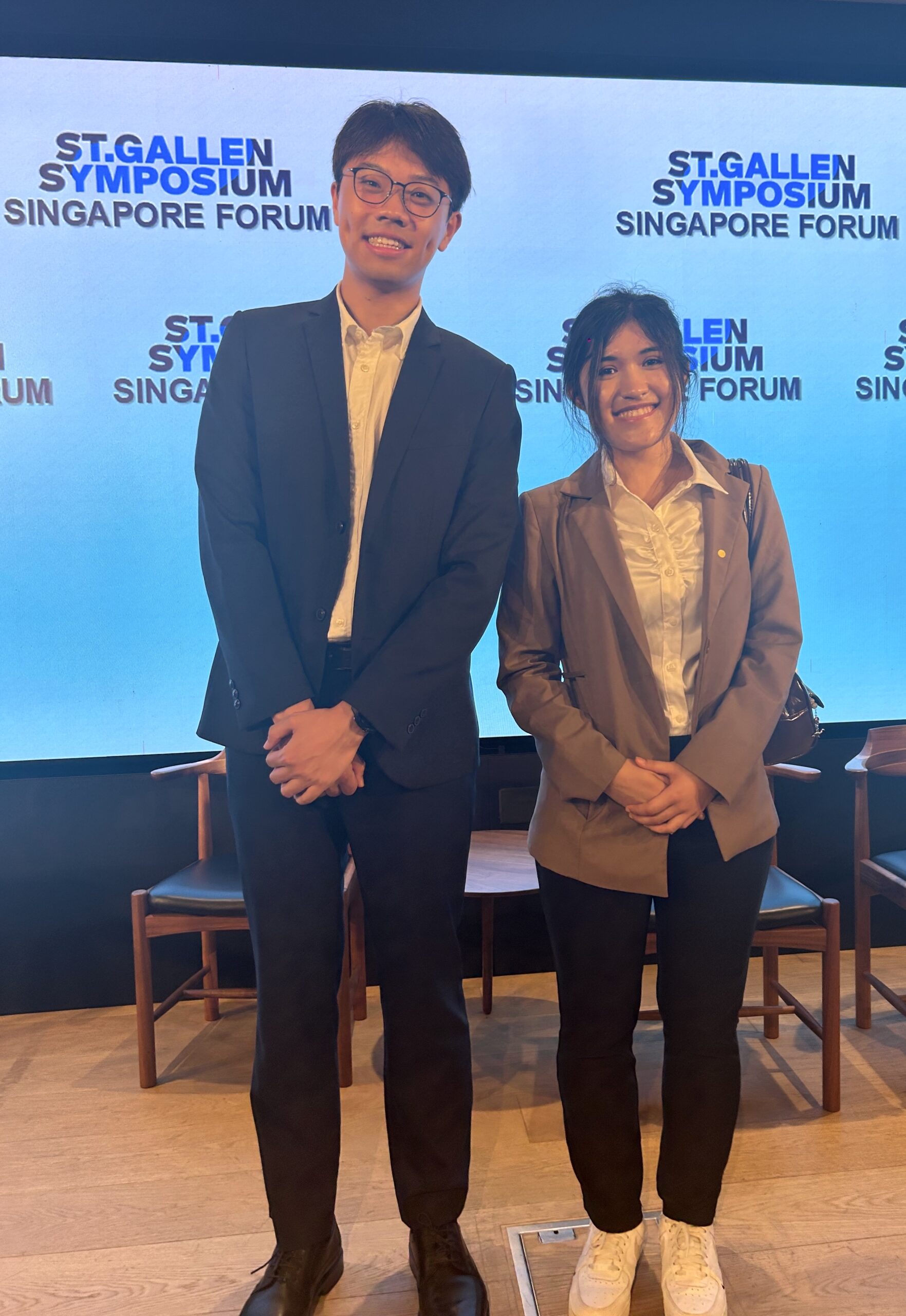
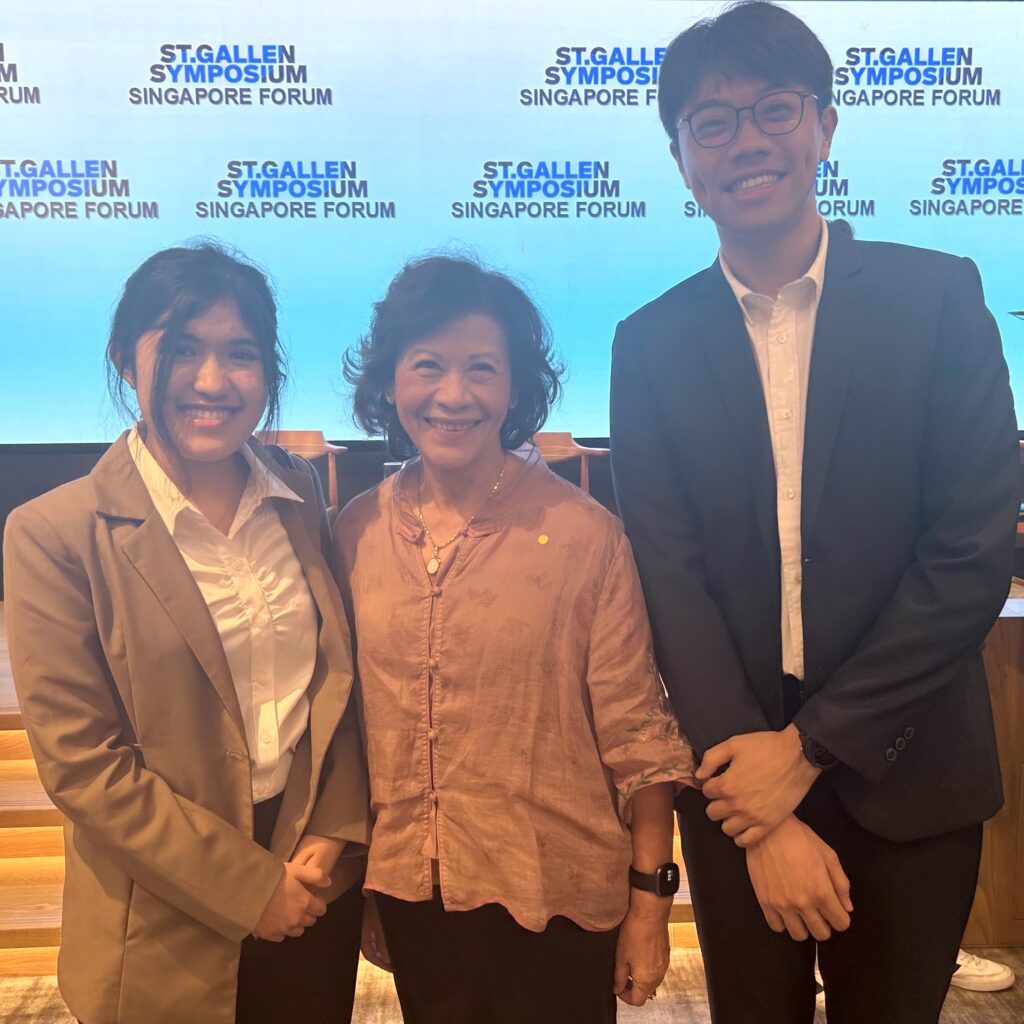
Attending the St. Gallen Symposium Singapore on 22 January 2026, Emilia and I left with one clear impression: we are living through a “Disrupted Age,” and many of the assumptions we have relied on about security, business, technology, and education no longer hold. As the stabilising influence of traditional superpowers recedes in key regions, the global security balance is eroding. What struck us as a key discussion during the symposium was how this shifts attention back to something closer to home: internal national unity. In a more volatile world, cohesion isn’t just a social ideal, but is a form of resilience against emerging threats to stability.
Furthermore, during the different engagement opportunities, we heard that in a fragmented and contested power landscape, states are increasingly bypassing diplomacy in favour of coercive force. That makes rebuilding interstate trust feel existential. But the answer does not lie in recycled frameworks. Speakers highlighted how it will take collective imagination, especially the willingness to envision a new social contract that prioritises shared survival over competitive dominance.
At the end of the event, one idea we are still thinking about is that just as the Industrial Revolution helped drive the rise of public schooling, the AI revolution calls for a new educational social contract. We may need to move beyond the binary of “student” and “alumnus” toward a more fluid identity, that of the lifelong learner, so that age is never a barrier to reskilling and reinvention.
We are grateful to the St. Gallen Symposium Singapore 2026 event organisers for putting together a timely and thoughtfully curated programme, and for creating a space where attendees could engage directly with these ideas. A special thank-you as well to RVRC Rector Dr. Noeleen Heyzer, both for her contributions as an invited panellist at the symposium, and for her warm invitation for us to attend and take part in the conversation. We are thankful for the opportunity, and look forward to staying engaged with the event’s themes.
-Tang Yu John (Year 2, RVRC) and Emilia Ayu Binti Yuhasnor Affandy (Year 2, RVRC)